

Services We Offer
Hip
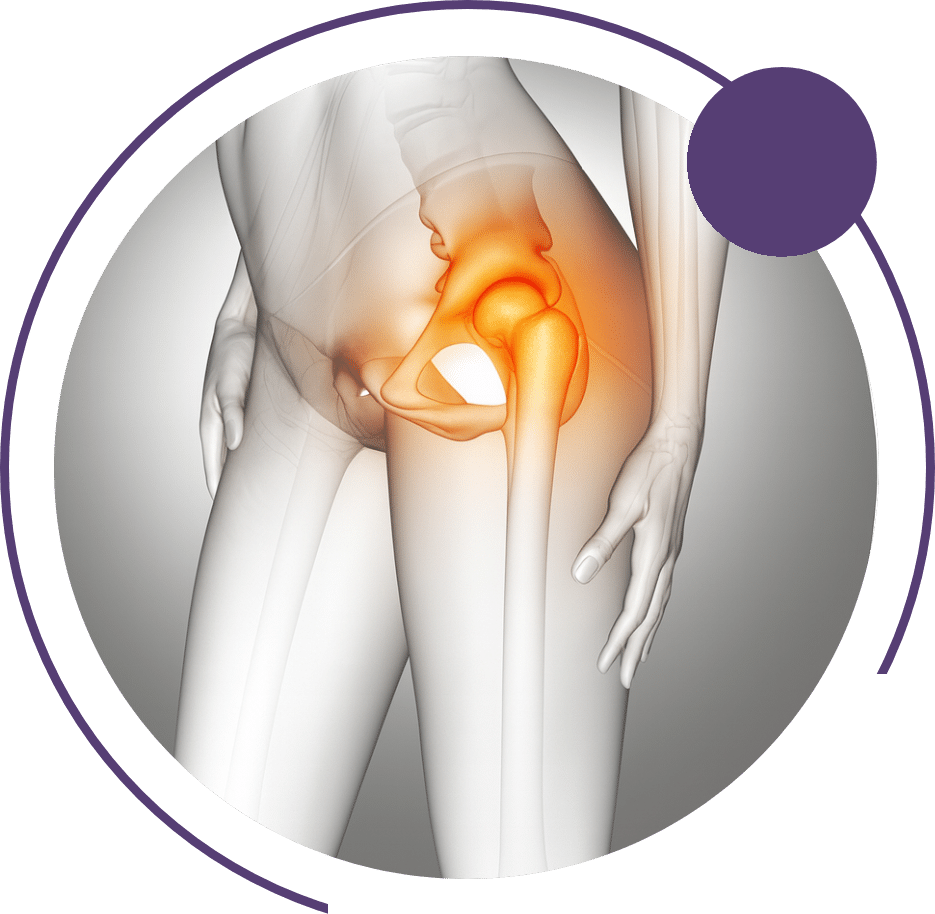
The hip – or coxa – is classified as a ball-and-socket joint and it is called the femoroacetabular joint. It gets its name because this joint is between the top of the femur (thigh bone) and acetabulum of the pelvis.

Stability and Function
The hip provides stability for support of the head, arms, and trunk to facilitate weight-bearing functions like squatting and walking. It is structurally designed for this purpose by the deep socket of the acetabulum compared to the shallow socket of the glenoid in the shoulder. Connective tissue like the labrum and muscles add more reinforcement to this joint.
Range of Motion and Vulnerability
Because of its ball-and-socket structure, the hip allows movement in multiple directions—far more than a hinge joint like the knee. However, this increased range of motion also means there are more opportunities for injury.

Common Causes Of Hip Pain
The cause of hip pain can be traumatic such as after a fall or motor vehicle accident or non-traumatic. Non-traumatic injuries can be from overuse or repetitive motions, but sometimes it can be congenital (the way you were born). Congenital variations in the orientation of the femur can change the angle and/or rotation affecting your standing posture or gait (walking pattern).
For example, if you’re someone that walks more duck-footed (retroverted) or pigeon-toed (anteverted) then there’s a variation in the amount of rotation in your femoral head. In addition, if your standing posture looks more knock-kneed (coxa vara) or bow-legged (coxa valga) when standing then there’s a variation in the angle between the femoral head and the shaft. All these things will not only affect how you move – walking, going upstairs – but also how and where you feel pain.

Other causes of hip pain include:

Osteoarthritis
Internal or external snapping hip syndrome
Tendinitis
Femoroacetabular impingement (FAI)
Trochanteric or ischial bursitis
Labral tear

Legg-Calve-Perthes disease (LCPD)
Slipped capital femoral epiphysis (SCFE)
Avascular necrosis (AVN)
Dislocation
Ligament sprains or tears
Muscle strains or tears
Fractures
And more
Common symptoms include:
Clicking/popping
Swelling or stiffness
Pain (aching, sharp, dull)
Difficulty putting weight through affected leg
Difficulty changing positions in bed or sitting/standing
How Physical Therapy Helps You
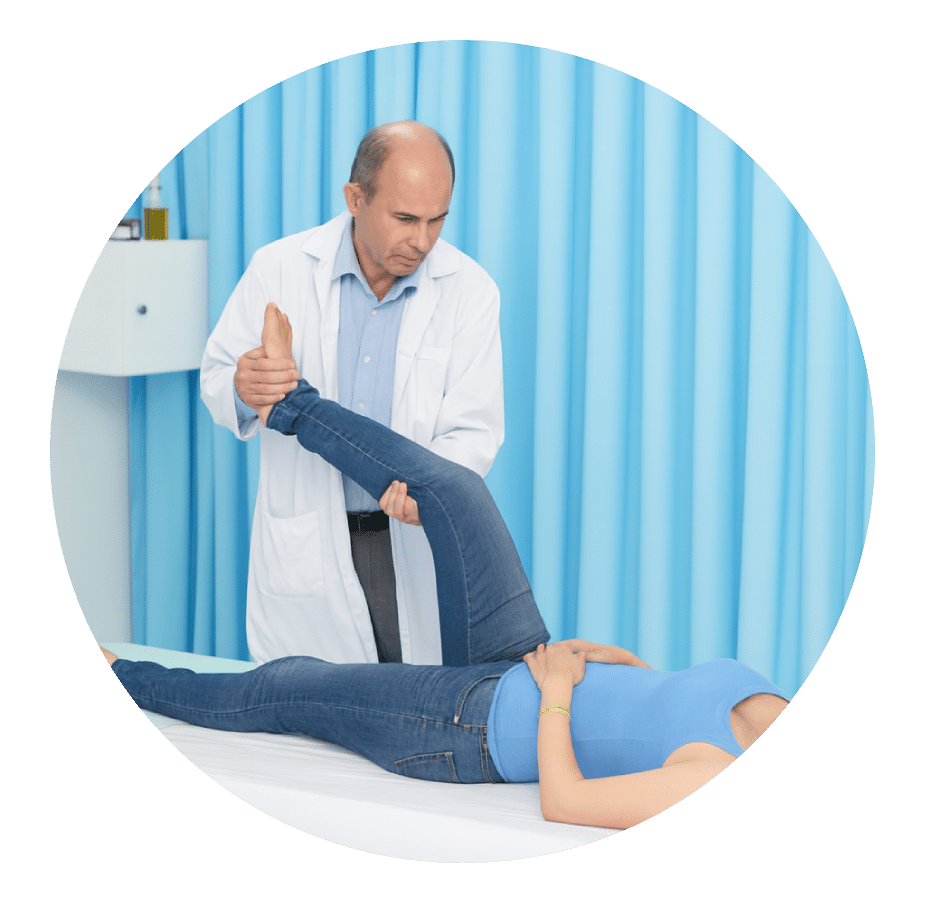
Hip pain can be debilitating on your performance, whether it’s at the gym or work. Like most body parts, your symptoms can be local (in the hip region), referred pain from a muscle, or radiating from the spine. A physical therapist can evaluate you to determine the cause of your symptoms to help manage pain, improve mobility, and restore strength.
Following the initial evaluation, your physical therapist will determine and discuss the cause of your pain or issues. Together, you and your physical therapist will set goals specific to your needs and create a plan of care. Your plan of care will help you accomplish your goals and get you back to what you enjoy doing!
Living with pain does not have to be your new norm. Contact us to get a free phone consult and schedule an initial appointment if you’re suffering from hip pain.
Frequently Asked Questions
What type of joint is the hip?
The hip, also called the coxa, is a ball-and-socket joint known as the femoroacetabular joint. It connects the top of the thigh bone (femur) with the acetabulum of the pelvis, allowing movement in multiple directions.
Why is the hip joint more stable than the shoulder joint?
The hip has a deep socket (acetabulum) that securely holds the femoral head, giving it greater stability for weight-bearing activities like walking and squatting. In contrast, the shoulder’s shallow socket allows more mobility but less stability.
What are common causes of hip pain?
Hip pain may result from trauma, such as falls or accidents, or from non-traumatic causes like repetitive overuse, congenital variations, or conditions including osteoarthritis, bursitis, labral tears, femoroacetabular impingement (FAI), and fractures.
What symptoms suggest a hip problem?
Signs of hip issues can include pain (aching, sharp, or dull), swelling or stiffness, clicking or popping sounds, difficulty putting weight on the affected leg, or trouble changing positions while sitting, standing, or lying down.
How can physical therapy help with hip pain?
A physical therapist will evaluate the source of your pain, whether it’s local to the hip, referred from nearby muscles, or radiating from the spine. They’ll design a personalized plan to manage pain, improve mobility, strengthen muscles, and help you return to your daily activities.